At the tail end of this past summer, I decided to take a leap and sign up for Career Foundry’s Data Analytics Program.

Yesterday marked exactly a month since my session’s official start date. Since August 12, it’s been a whirlwind of new information and platforms to practice– Excel, above all; some baby steps into Python using Colab notebooks; tentative to vaguely collegial (?!) interactions with AI chatbots (ChapGPT and Gemini AI). I hope to share technical insights in the future, but for now, my skills definitely count as quite beginner; it’d be as riveting as hearing about how I figured out how to stand up without falling over after 30 seconds. But in the meantime, here are three lessons I’ve started to learn (/re-learn) about learning:
- Self-Reliance…or Recursive Loop? The Importance of Mentorship and Support
- Connect: Another Way to Practice the Process
- Alert! Your syllogism might be silly.
1) Self-Reliance…or Recursive Loop? The Importance of Mentorship and Support
It is, without a doubt, an exciting time to be an autodidact. However, in the overwhelming vastness of the information ocean, you want something like a well-carved oar for a start, and good company to counter-balance your earnest, clumsy paddling.

Overwrought metaphor aside, I count myself as lucky that it captures the learning scenario I’ve found so far at Career Foundry. Clear, in-depth lesson texts provide oars. Exercises at the end of each do hand-hold, but not too much– just enough to test your grasp before concepts begin to challenge neat explanations in wave upon wave of implementation. And most crucially, I have the literal good company of a responsive tutor and an exceptional mentor. Nothing like expert scrutiny to create accountability: a major part of the Career Foundry appeal, especially as I found my engagement with the Google Certificate exercises getting sloppy, then inconsistent, then nil.
But even more importantly, their presence and feedback can keep me from going completely overboard. (Can’t say the same for this boating analogy….)
What is “overboard” in a learning context? At first, trying to find answers by looking within yourself is self-reflection. But willfully go without any external input for too long and I know I’m quickly overboard, Icarus-style in the deep: the situation becomes a recursive loop. Recursion, in computer science, describes a function or method that calls back to its own self, over and over again. Isolating myself with my own devices–the existing habits, the biases waiting to be confirmed–I enter into an analogous feedback loop, brute force pushing what (and how) I know around, past their usefulness. The cumbersome engine threatens to melt the machine when “working harder”, never smarter.
Highly-tailored feedback and advice from my learning team have been invaluable in breaking this cycle. Their guidance has helped to check my tendency to over-rely on self-study and to drown myself in external resources of dubious relevance. As well-laid out as the Career Foundry lessons are standing alone, they still constitute a kind of vacuum: they’re more likely to gesture, in my mind, to all the other lessons and exercises out there I could and should find, rather than to reassure me that indeed, it’s not all down to me as to whether I sink or swim.
2) Connect: Another Way to Practice the Process
Think about connecting with the data. This is different from caring– you don’t have to fabricate some kind of feeling for, let’s say, car sales or scooter rentals or shipping times. What I mean is, Do you actually know what you’re working with?
There I was, making my merry way through the third exercise–sorting, filtering, running basic functions, flexing my little novice Excel muscles on the video game sales dataset–when I arrived at a question so basic, I started typing out my answer without a second thought. It was the ninth question; something to the effect of, “What is the dataset observing?” (What information does each row contain?) Surely, I would know by now.
Of course, as it turned out, things proved otherwise: I had not properly conceptualized the Year attribute; cascading consequences resulted, like misconstruing how sales were translating to rankings. Discovering this past the half-way point of the assignment definitely amplified my surprise (well-played, CF) and helped to bring home the importance of taking that extra minute, right at the beginning, to construct a full summary sentence for myself, guided by the data structure and context of the variables
But…this home is new, so naturally, I’ve misplaced the figurative keys and gotten locked out more than a few times since. Working on the final project for the first course, I eventually found myself making and remaking the same pivot tables, the same charts, again and again. On the one hand, I understand that I was trying to fling myself over the planning paralysis/procrastination hurdle, under whose shadow I loiter more often than I’d like. On the other hand, the idiom “from the frying pan into the fire” could not have applied more to the situation, as I found graphs in my Powerpoint draft transforming into nonsense, because of some change I had unwittingly introduced into a linked sheet…that I could no longer trace.
Connect with what you’re doing.
…In the end, this lesson I’m trying to wrap my brain around could be generalized to “Be intentional” and “stay present.” At a higher resolution, it’s more like, for crying out loud please take the time to name each new sheet, Amy, it’s no different from making sure to name and color-code each new instrument track for a music mix. (Alas, we don’t become completely new people by moving to a whole new country; the same problems follow.)
But, I’m playing around with being particular when it comes to the word “connect”. “Connect” is an action–there’s a tangibility to it, and a materiality to the relationship implied, even if you’re talking about ideas, about emotions. For me, attention to “connecting” feels like it could achieve the benefits of “being present”, without having to turn to such an abstract directive (I mean, for crying out loud, what is “being”, what is “the present”).
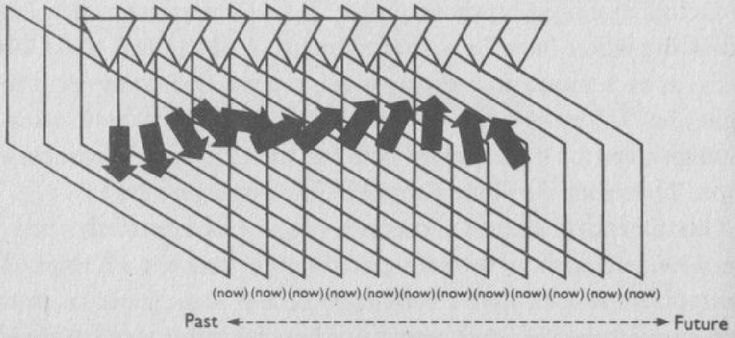
I have trouble picturing “taking my time” (What is Time? And if you mean a picture of not doing something by “take your time”, that’s impossible, because there’s no picture for “not”)…but I’m finding I have some visceral object references for “connecting” that I can turn to, even if it is for “connecting” with something intangible, like a process.

(The Fox asks the Little Prince to be his friend, explaining that this entails coming to the field each day to just sit across from each other and to stare. The Little Prince refuses at first, saying he’s just gotten to Earth; he’s got too many people and places to get to know. The Fox solemnly interjects, saying that we only truly know the things we tame, and if the Little Prince took the time to be his friend, how wonderful would the world be, that every time he saw the blades of wheat, he would think of the Little Prince because the color of his hair.)
3) Syllogism – Context = Silly(gism)

Amy–are your wild attempts at avoiding all contradictions producing a closed system of thinking that is, in the end, a complications-proliferating machine?
(That’s the title for the symphony I’m working on, to be performed by crickets.)
…I’ll try to elaborate on this in a follow-up post, because if I don’t go ahead and just hit “publish”, I might never attempt blogging again (I’m not crying, you’re crying). Moreover, it happens to relate to another topic I’d like to explore, which is the history of “data” itself, and the completely different epistemological (you cringed, I saw you) priorities for which it can be mobilized.
Basically, my third lesson has been something like: there’s a difference between the goal of data being to deduce (axiomatic) truths, and the goal of data being to infer a factual basis for action. Data analytics is concerned with the latter, and if you bring the attitudes of the former into the process–without even being very good at the former’s games–then definitely make sure to set up a Pomodoro timer to stretch out your inflexible thinking at regular intervals.
I’m actually not drawing a battle line between the two–deduction and induction. Data analytics (heck, human reason in the context of the world) requires the well-placed use of both. I’m just saying, (Amy,) if you’re not careful about which one’s spirit you’re drawing upon for the undertaking, you might end up doing something ridiculous… like missing the most obvious growth opportunity in video game genres, because of an earlier (and what more, poorly generated) proposition.
But hey,
 AMYZNOTES
Leave a comment